Showing posts with label epic. Show all posts

Wednesday, January 2, 2013

Flick of the Day: The Hobbit- An Unexpected Journey

It was with decided trepidation that I ventured to the cinema over the Christmas holidays to view the first instalment in Peter Jackson's much commented upon Hobbit Trilogy. Between The Hobbit and The Lord of The Rings, Tolkien's writings were a cornerstone of my childhood and there is nothing as disappointing in a pop culture sense than seeing a book you've adored poorly adapted for the big screen.The Hobbit is not a small book but it is about a quarter of The Lord of The Rings in word count so the idea that it required a trilogy of films struck me as odd. I read the early reviews and was not hopeful. So it is a delight then to report that all my fears were largely unfounded and that Peter Jackson has once again delivered a well thought out version of Tolkien's middle earth in today's flick of the day The Hobbit: An Unexpected Journey.
Our return to middle earth opens with a visually stunning preamble telling the tale of how the Dwarves were driven out of their kingdom beneath the mountain by the dragon Smaug. Forced to abandon their homes and great wealth, the dwarves roam the land taking up metal work were they can get it, a wandering people. We fast forward to an ageing Bilbo Baggins, once again played by Ian Holm, attempting to tell his story for the benefit of his nephew Frodo. Before long we meet a young Bilbo played with a sturdy air of confusion by Martin Freeman. He is idling away his days in The Shire smoking his pipe and enjoying the quiet life when much to his chagrin, the wizard Gandalf,who is again played by the excellent Ian McKellen, seeks to send him on an adventure.  Soon enough he is best with a party of dwarves arriving on his doorstep seeking to eat him out of house and hobbit hole. After initially turning down their offer of employment as burglar in their company, Bilbo eventually sets off into the wilds beyond the Shire in the company of Gandalf, Balin, Dwalin, Bifur, Bofur, Bombur, Fili, Kili, Oin, Gloin,Nori, Dori, Ori and of course the leader of the company Thorin. There are many obstacles to face along the way from Trolls to Orcs and the action proceeds apace across the gorgeous New Zealand countryside. Given the massive running time Jackson time has afforded himself, it is nice to see him put The Hobbit in the context of the wider Lord of The Rings tale and there are lengthy scenes explaining the rise of the darkness in Mirkwood. As this episode ends, we leave the company in sight of the Misty Mountains.
When the film gets going, it is an enjoyable thrill ride of a journey and makes for compelling cinema. If there is one criticism however it is that it does take awhile to reach this point. The opening chapter of the novel is called An Unexpected Party and this one party takes a good 45 minutes to take place. Jackson cannot be accused of not being due care and attention to the text, rather he luxuriates in it being as faithful as he possibly could be to every twist and turn in the narrative.
The dwarves feel well cast but it is difficult to judge because we don't really get much of a chance to know each in person, there is just too many of them. However hopefully this will be resolved over the course of the trilogy. It would be a shame were the characters to remain undeveloped. 
The action scenes are well judged by Jackson though it does feel like CGI is in a much greater use than in The Lord of The Rings. This is not necessarily a problem but at times the screen feels almost cartoonish, the landscape too soft edged but it is a minor criticism.
I cannot comment on the quality or lack thereof of the much vaunted 48 frames per second 3D effect for I chose to view the film in good old fashioned 2D. Perhaps that is comment enough. I was irked to see however that there was a much smaller selection of 2D screenings on offer in comparison to 3D. This would seem like a new method of coercion by the studios to force you into paying extra for an inferior viewing format. Alas was it ever thus.
I look forward to the next instalment eagerly.


Thursday, April 19, 2012

Flick of The Day: City of God / Cidade de Deus

It's hard to believe but it is ten years since Fernando Meirelles tale of the effects of crime on the inner city slums of Rio de Janeiro burst onto our cinema screens. Epic in structure, it is a landmark film of modern Brazilian cinema and was a big hit in its day, leading many cinema critics Top 10 lists for the year and garnering 4 Oscar nominations.
Narrated by Rocket played by Alexandre Rodrigues among a cast of relatively unknown Brazilian players, the film opens with Rocket as a gifted amateur photographer caught literally in the middle of the war zone between the gang led by local drug lord Lil Ze and the corrupt police who watch over the slums. As this showdown takes place, Rocket thinks back to how the current gang war started and how the slums were initially built way back in the 1960's. In a narrative which jumps back and forth across two decades of Rio street history, Rocket tells the various stories of his home town from the original gangsters called the Tender Trio on account of their wish to avoid conflict to the rise of Lil Ze and his partner Bene while completing an overarching narrative of Rocket's own attempts to survive and escape the slums in pursuit of his dreams of being a photographer.
While often bleak in its view of the violence and corruption which blights the lives of the citizens of the city of god, the film pulses with the vibrancy of the city. It jumps out at you from the beginning and never lets up displaying all of the hyperactivity of early Tarantino with a soulfulness and sense of humour all of its own. It never seeks to glorify the actions of these hoods, seeing as they are based on actual events and is all the better for it. It gives the film an almost documentary feel despite the frenetic speed of things.
Utilising a cast of largely non-professional actors from the city of god slum adds even more to the sense of realism which pervades throughout. All of this realism could make for a depressing film without a moral core and this core is Rocket. He quickly realises that he is not cut out for life as a hoodlum and is the character which holds the centre ground when compared to the terrifying psychotic that is Lil Ze. Rocket documents the rise and fall of Lil Dice who grew up into Lil Ze and is the main focus of the narrative. Both the younger version played by Douglas Silva and the fully grown version played by Leandro Firmino da Hora are scary from the get go and dominate the screen.
All in all, this is a powerful film even today and if you haven't seen it you are missing out. A great cast of unknowns combined with an epic tale of the effects of crime on a neighbourhood and its denizens make for gripping viewing.

Friday, January 13, 2012

Flick of the Day: War Horse

Whisper it gently but its been a ho-hum few years for one of the great and most succesful directors of the modern era, Steven Spielberg. Of his body of work completed in the noughties, there have been more highlights (Munich, Catch Me if You Can, War of the Worlds & Minority Report) then lowlights (The Terminal, Indiana Jones & The Kingdom of the Crystal Skull, AI) but only just. Indiana Jones in particular was just a very poor film. His latest film, an adaptation of the bestselling novel by English author Michael Morpurgo would seem exactly like the kind of story for Spielberg's talents to make the most of. It is a delight then to report that War Horse is exactly that and his finest film in years.
Opening before the Great War in sun dappled English countryside, exhibited in gorgeously detailed tracking shots by Spielberg, we are introduced to a horse called Joey at his birth, a thoroughbred foal born in Devon and raised to be sold at the local horse market. The scene of Joey's separation from his mother is heartbreaking and yet not played for sentimentality. Enter stage right Ted Narracott, a tenant farmer played by Peter Mullan, one of the great British acting talents of the last few years. A spendthrift and a drinker, Ted takes a fancy to this horse and bids more then he can afford to secure Joey. He outbids his local landlord Lyons played by David Thewlis  as a moustache twiddling villain. Ted's son Albert, played by Jeremy Irvine  in the central role, who is aware of Joey's potential is set the tasl of training his new horse to be a working farm horse. Together they form a bond  that is stronger then oak. Of course Lyons will have his revenge and threatens to throw the family off their farm unless the rent is paid but all is saved when Albert trains Joey to plough the fields and save the family farm. So far so good, but this is not a happy story and the outbreak of  the Great War brings ill tidings for both Albert and his simpatico horse. Joey is sold to the Army, specifically to dashing young cavalry officer Tom Hiddleston. A fundamentally decent man, he promises Albert he will look after Joey like his own and return him after the war. So begins an odyssey for both Albert and Joey as they seek to find each other once again and return home to Devon. Joey's journey takes him through bloody and disastrous cavalry charges, a pair of Germand deserters, the life of a sickly young French girl and her grandfather, before falling into the hands of the German artillery units who used horses to carry guns to the front while Albert's takes him to the trenches of the Somme and all of the horror that entails. In some spectacular filmmaking, Spielberg manages to document the horrors of the Great War through the eyes of a horse and creates some particularly affecting scenes.

The skill of a talented filmmaker really shows here. Spielberg is particularly adept at creating some striking visuals without being overly visceral in his depiction. As an example, in a very fine scene we view the death by firing squad of two deserters in a lonely field through the rotations of a windmill with the sails shielding us as the fatal shots are discharged. Yet in other scenes, we are not spared the horrors. It is a fine balance and one that Spielberg strikes well.

In this, he is blessed with a fine cast throughout. The cream of European acting talent is on show. Liam Cunningham plays a small but pivotal role in a deeply affecting scene as a British military surgeon. Benedict Cumberbatch  makes the most of an enjoyable role as a deluded cavalry officer who leads his men on a doomed charge and the always watchable Niels Arestrup who was so magnetic in last years Un Prophete appears as a French grandfather just trying to survive the war.

At the Irish premiere last night, Liam Cunningham noted that this is a sad film and it is that but ultimately what I took from the film were two things. Firstly, there is a strong bond between man and the animals they care for and work with and this really comes across in the film. Secondly, the sheer futility and stupidity of all sides in the First World War is deeply ingrained in this film. The human cost of that war is something I was very familiar with but the cost to nature was not something I was aware of. 500,000 horses died in the First World War. The level of cruelty which man is able to stoop to in his dealings with animals is oustripped perhaps only by his cruelty to his fellow man. This dychotomy between the obvious bond between man and beast and the level of cruelty shown is not one easily reconciled here or anywhere else. Ultimately though, there can be no creed or politics or human ideals worthy of such a cost to this planet and its inhabitants, human or otherwise.
A very fine film, perhaps the best of the year and surely a contender for an Oscar in the upcoming awards season. Spielberg's direction is superb with a deft touch missing from his recent work. A fine cast shine throughout including the oft forgotten Emily Watson  in another performance that surely marks her as an actress of the very highest order. The story is epic in scope and structure and yet ultimately never loses sight of the boy and his horse. A triumph.


Saturday, December 31, 2011

Flick of The Day: Ran

One of the most celebrated Japanese film-makers of all time, Akira Kurosawa has a long and varied career as a director. Due to his westernised style of filming, he was always more popular outside of Japan then in his native land. Along with  Yasujirō Ozu, Kurosawa became the most recognised Japanese director in the west and nearly all of his work received some form of release in the US and Europe during his lifetime and the inevitable American remakes followed. Most notably, his classic tale of feudal Japan The Seven Samurai was the basis for John Sturges cowboy romp The Magnificent Seven while Yojimbo became Sergio Leone's A Fistful of Dollars. Perhaps his best work is this sprawling epic re-imagining of Shakespeare's King Lear and today's flick of the day, Ran
An elderly warlord played by Tatsuya Nakadai is the King Lear of this piece and like Lear attempts to split his long fought for kingdom between his three sons Taro, Jiro, and Saburo. Taro and Jiro flatter to deceive and proclaim this to be a great idea while Saburo sees that this will only cause chaos and treachery. Interpreting Saburo's disagreement as a threat to his authority, he banishes him from the valley. Inevitably the old lord soon falls out with his two sons Taro and Jiro and sets off a brutal and bloody war for control of the kingdom. Across a number of expertly filmed set piece battles, this war plays itself out. Of course the great lord, now left to wander the plains with only his jester for company comes to see the error of his ways and that Saburo had his best interests at heart. 
A distilled version of Shakespeare's classic tale, with far less wordy speeches and much more emphasis on visual imagery. This film is worth seeing for that alone, Kurosawa had an eye for a shot that so many Western directors would kill for. From the natural beauty of the opening scene at a boar hunt to the epic battle scenes with variously coloured armies clashing on fields and castles, this is a feast for the eyes. In one particularly stunning scene, the ambient noise is removed letting the Takemitsu score soar while the combined armies of Taro and Jiro attack the castle which contains their banished father. Arrows, blood and ritual suicide glide by the screen.
All in all, this is one of Kurosawa's best, epic in all aspects including its length which comes in just shy of 3 hours, this is one of those films to see just for the sake of seeing it. The story is a well trodden path at this stage but Kurosawa's unique visual style and a cast of some of the best Japanese actors of their day carry it through. This would be the great master's last epic and it is fitting perhaps that it the tale of Lear.

Tuesday, June 7, 2011

Flick of The Day: GoodFellas

The gangster movie has been a cornerstone of cinema since before there was a Hollywood. From early classics like Little Caesar and The Public Enemy in the 1930's to Coppola's The Godfather and Scorsese's Mean Streets in the 70's, it has always been a popular genre. It begs an obvious question, what is the best gangster film of them all? I think the answer to that question is today's flick of the day Martin Scorsese's GoodFellas.
Based on the bestselling book by Nicholas Pileggi, this is the true story of a life in the Mafia. It follows the course of Henry Hill, played by Ray Liotta, a half Irish half Sicilian who becomes involved with the mob first as an after school job before blossoming into a fully formed gangster, a GoodFella. He falls under the spell of Jimmy Conway, a rising star of the family, played by Robert De Niro and befriends a crazy hot head called Tommy DeVito played by Joe Pesci. Set to a fantastic period soundtrack, the film moves from the early 50's to the 70's to the bitter end of it all in 1980. Together, the three work various scams and heists for local chieftain Paulie Cicero, a star turn from Paul Sorvino. Like all the great stories, this is the story of the rise and fall.
Scorsese has created a work of stunning breadth and ambition. It comes in at nearly 150 minutes and yet breezes by such is the speed and focus of the editing. There are so many high points that they can't be listed from the single continuous take entrance to a nightclub to the snappy quotable dialogue and the vast cast of characters that remain memorable such is the strength of the script.

Henry Hill: You're a pistol, you're really funny. You're really funny. 
Tommy DeVito: What do you mean I'm funny? 
Henry Hill: It's funny, you know. It's a good story, it's funny, you're a funny guy. 
[laughs] 
Tommy DeVito: What do you mean, you mean the way I talk? What? 
Henry Hill: It's just, you know. You're just funny, it's... funny, the way you tell the story and everything. 
Tommy DeVito: [it becomes quiet] Funny how? What's funny about it? 
Anthony Stabile: Tommy no, You got it all wrong. 
Tommy DeVito: Oh, oh, Anthony. He's a big boy, he knows what he said. What did ya say? Funny how? 
Henry Hill: Jus... 
Tommy DeVito: What? 
Henry Hill: Just... ya know... you're funny. 
Tommy DeVito: You mean, let me understand this cause, ya know maybe it's me, I'm a little fucked up maybe, but I'm funny how, I mean funny like I'm a clown, I amuse you? I make you laugh, I'm here to fuckin' amuse you? What do you mean funny, funny how? How am I funny? 
Henry Hill: Just... you know, how you tell the story, what? 
Tommy DeVito: No, no, I don't know, you said it. How do I know? You said I'm funny. How the fuck am I funny, what the fuck is so funny about me? Tell me, tell me what's funny! 
Henry Hill: [long pause] Get the fuck out of here, Tommy! 
Tommy DeVito: [everyone laughs] Ya motherfucker! I almost had him, I almost had him. Ya stuttering prick ya. Frankie, was he shaking? I wonder about you sometimes, Henry. You may fold under questioning.

The point made throughout the film is that the various characters are in the mob because they like it, it is what drives them. Their various flaws, the frankly psychotic Tommy, the kleptomaniac Jimmy and the easily led Henry are what make them successful gangsters.
It is difficult to underestimate the legacy of GoodFellas, much like Scorsese's previous reinvention of the genre in 1973 with Mean Streets. The creator of HBO's The Sopranos even went so far as to say that "Goodfellas is the Koran for me" and cited it as the film which drove him to create his own masterpiece. The film is a triumph on so many levels. It is not just an account of a life in the Mafia, but a morality play. At the beginning, as Henry and Jimmy follow the rules and pay tribute to their leader Paulie, stay away from drug dealing and avoid murder as a last resort, they begin to prosper. However as the decades move on and they become deeply involved in the drug trade and go against Paulie's wishes, events spiral out of control and lead eventually to their downfall.
I don't think there is anything more that can be said really. It is a fantastic film, packed with stand out performances and perhaps Scorsese's best work as a director. If you haven't already seen it, you really should.

Monday, June 6, 2011

Flick of The Day: The Secret in Their Eyes / El secreto de sus ojos

The foreign language Oscar is a funny old thing, it has often been a source of controversy be it in the unfair nature of the nomination process or some of the more outlandish winners down through the years. 2010 seemed at first to be another such year, when a largely unheralded Argentinian thriller beat out France's Un Prophet and Haneke's The White Ribbon, two films that had done huge business and critical acclaim on the Indie scene in Europe and the US. However, it is only on closer viewing that it becomes apparent what a gem of a movie, and today's flick of the day, The Secret in Their Eyes is.
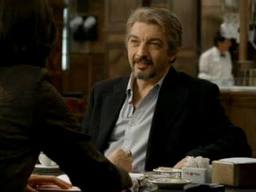
The film opens with Ricardo Darin as Benjamin, a recently retired law clerk and investigator is struggling to write a novel based on a vicious rape and murder case from the mid 70's. He enlists the help of his old boss, the beautiful Irene played by Soledad Vilamil, who he has carried a flame for, for many years. She expresses reservations for reasons which will eventually come apparent. The film then moves in flashbacks between the present day and 1970's Argentina which is rife with corruption and and the excesses of a military junta. A woman is found raped and murdered while her husband was at work, and two immigrant workers have a confession beaten out of them. Benjamin teams up with his lush colleague Sandoval to find the real killer. Together they identify various subtle details which point toward a childhood friend called Gomez. However finding evidence to obtain a conviction is much harder to obtain, doubly so when the political forces controlling intervene. As the past merges with the present, and old secrets come to the fore, Benjamin finds the shocking conclusion at the heart of this tale while perhaps forcing him to confront the heartache he has repressed all these years.
Juan Jose Campanella has created a film of outstanding breadth with such attention to subtle detail that is surpasses anything in the thriller genre I've seen in recent years. At times alternately shocking, frightening or delightfully heartfelt on any number of levels, it is an enjoyable viewing experience. The use of alternating flashbacks with present day action is a tried and tested method and as the plot moves on it exposes the fact that this is Benjamin's memory of events and is often not complete. 

Pablo Sandoval: A guy can change anything. His face, his home, his family, his girlfriend, his religion,his God. But there's one thing he can't change. He can't change his passion...

The central performances from Darin and Vilamal are measured and wonderfully realistic. They give the film a feeling of being true to life.  The setting of 1970's Argentina is an important one and central to understanding the film. Under the auspices of a military coup, a crackdown of all dissent was put in place and a fair trial became a thing of the past.
The film is not just a gripping tale well told, it is also a technical marvel. Campanella must now join the likes of Orson Welles in Touch of Evil for one of the most technically audacious shots of all time involving a packed football stadium and one continuous take from an aerial shot to the depths of the crowd to the bowels of the stadium to the grass on the pitch. Though surely digitally enhanced, it is a remarkable shot.
It is the little details which make the film from the stolen glances between Benjamin and Irene down through the years to the way in which the killer is tracked down to the throw away lines which turn out to have important significance in the final shake-up.
One of the best films of the last few years and a worthy Oscar winner, this just has to be seen by anyone with a passing interest in the power of modern cinema. Tellingly like so many of the great works of the last 5 years, it hasn't come from a big Hollywood Studio but from the foreign language screening of your local cinema. Why with all the opportunities and assets at their disposal do the major studios seem incapable of producing the kind of storytelling worthy of a bright literate audience? All the 3D in the world can't fix that.

Thursday, June 2, 2011

Flick of The Day: Apocalypse Now

All great artistic movements have moved in cycles, with a small scale beginning, a high point of some great work which is swiftly followed by excess, hyperbole and an eventual nadir. The so called New Hollywood movement of the 1970's was no different. Today's flick of the day, Apocalypse Now fits neatly into that curve just past the zenith when the movie brats that had taken over Hollywood began  to become self indulgent creating cinema of monumental excess that would end with Michael Cimino's Heavens Gate. That is not to denigrate Apocalypse for it is a film borne of some amazing talent. A wild ride into the heart of darkness in the Vietnam war. It is, in short, unlike anything else you will ever see.
With a principal shoot lasting well over a year and a post production period that dragged on for another 2 years, this is a film that was literally years in the making. Martin Sheen is Captain Benjamin Willard, a special forces operative on the edge of reason. He is despatched by some shady superiors on a mission upriver into enemy territory to track down and terminate "with extreme prejudice" Colonel Walther Kurtz played by Marlon Brando, a deranged officer who has gone too far and set himself as a demigod in the heart of the Cambodian jungle. What follows is one hell of a trip. As Willard moves upriver, he encounters a surf happy Colonel Kilgore in the Air Cavalry played by an amazingly over the top Robert Duvall who goes into battle blasting out Wagner. He encounters Viet Cong, Playboy Bunnies and madness at every turn before finally reaching Kurtz's compound for a final showdown.
Based on Joseph Conrad's novella Heart of Darkness, Apocalypse Now isn't so much an account of the Vietnam War as it is an indictment of the madness of all war transposed onto the Vietnam conflict. It is violent to the point of cruelty at times and overlong but there is much to enjoy here. For a production that was beset with difficulties, storms, Sheen suffering a heart attack and Brando turning up on set bloated and overweight, there are some spectacular set pieces. The dawn helicopter raid and the the arrival at Kurtz's camp are particular highlights. Given the amount of film that was shot, it is amazing Francis Ford Coppola managed to produce the film he did, indeed the film is as famed for what was left out as left in. There are a number of expensively assembled sequences which didn't make the final cut and yet it still feels too long by the end given that it takes so long to arrive at its destination. The film was re-cut for a redux version in 2001, which restores 49 more minutes of footage but this version has always felt as overkill to me.
Ultimately though it doesn't really matter about the length because there is just about enough here that is entertaining and enthralling to carry the film till the inevitable conclusion. One sour note that I feel must be mentioned though is the decision of Coppola to hack in a cow to death with machetes for the climax of the film, in homage to a local tradition. This is a reprehensible act and once again reinforces the feeling that this is the beginning of the end in terms of the New Hollywood movement. It earned the film an "Unacceptable" rating from the American Humane Association. One cannot fail to agree with that sentiment.


Kilgore: Smell that? You smell that? 
Lance: What? 
Kilgore: Napalm, son. Nothing else in the world smells like that. 
[kneels] 
Kilgore: I love the smell of napalm in the morning. You know, one time we had a hill bombed, for 12 hours. When it was all over, I walked up. We didn't find one of 'em, not one stinkin' dink body. The smell, you know that gasoline smell, the whole hill. Smelled like 
[sniffing, pondering] 
Kilgore: victory. Someday this war's gonna end... 

All in all, this film broke new ground in its portrayal of war, and despite its many flaws, is worth seeing if only for it's place in the history of cinema and the career's of the fine cast which populate it.

Thursday, May 26, 2011

Flick of The Day: Forrest Gump

Cinema has always had the power to divide people, from the silent era race baiting of D.W Griffith's The Birth of a Nation to the propaganda film's of Leni Fiefenstahl. In the modern era, there is often a divide between critics and audiences in terms of the relative worth of a film. As the box office success of the Fast and Furious saga attests, critical derision is no barrier to financial reward. Today's flick of the day, Forrest Gump, is a divisive film in its own way. Very much the Marmite of 90's Oscar Winners, you either feel is a banal pop culture confection or a technically brilliant ode to the 20th Century. 
Forrest Gump is a man of limited intellect who achieves more in an eventful life then more worldly individuals could dream of, the film acts as his life story. Tom Hanks deservedly won an Oscar for a compelling performance. Opening with his childhood in small town Alabama, from the cruelty of his fellow schoolchildren to the travails of his childhood sweetheart, Jenny, played by Robin Wright, the film moves along at a cracking pace. Through the wonders of technology, Forrest is inserted into news footage of the day as his life crosses paths with important figures from 20th Century history like JFK, John Lennon and events like Watergate and Vietnam. It is some life, without an inkling of effort Forrest becomes a College football star,  a Vietnam war herospeaks at an anti-war rally at the Washington Monumentdefeats the Chinese at table tennis, and finally opens a profitable shrimping business before deciding to run back and forth across the country for several years.
The real genius of the film is it's nostalgia for the latter half of the last century. There is not an important event in recent American history which Forrest doesn't in some way come across, and the film is carried along by a great soundtrack of the era. From Elvis Presley in his youth, to the classic sixties sounds of The Doors, CCR, et al and the late seventies work of Fleetwood Mac and the disco era. It often feels like a really long episode of Reeling in the Years. This is not to denigrate it, for its enjoyable ride but it does feel a bit too rose tinted at times, driven along by the various philosophies by which Forrest lives his life.


My momma always said, "Life was like a box of chocolates. You never know what you're gonna get."


Perhaps as the antithesis of his care free life is the hard living endured by his childhood sweetheart Jenny. Everywhere Forrest lands on his feet, Jenny trips up. After a sexually abusive childhood, and a lifetime of being treated badly by lovers, employers and educators, she falls into the various drug crazes of the era. There is a theory in fact that the film is perhaps the most overtly right wing piece of mainstream cinema ever produced. The care free spirit and folk musician, leads a life of dissolution and succumbs to the AIDS virus, while the war hero, chaste living southerner becomes a millionaire. Draw your own conclusions.
All in all, this is a technically brilliant piece of film-making, with an enjoyable storyline that you can't help but be enchanted by, in my opinion. Led by a fine turn from Hanks, there is some great supporting work from Robin Wright and Gary Sinise. An enjoyable film that won 6 Oscars on its release in 1994, it is well worth a second look.

Wednesday, April 27, 2011

Flick of The Day: The African Queen

We have looked at the work of Humphrey Bogart before in The Big Sleep and The Maltese Falcon which was the first collaboration between Bogart and director John Huston. Perhaps their most famous collaboration is today's flick of the day, The African Queen. A film as famous for its laborious location shoot as for the end result, it is a great technical achievement even today its arduous shoot earned Bogart and co-star Katharine Hepburn Academy Awards nominations.
Adapted from a novel by C.S Forester, the African Queen is set in East Africa during World War 1 and stars Bogart as Charlie Allnut, a gin swilling slob of who captains the steam boat of the title, delivering supplies up and down the river. Hepburn is her usual prim self as Rose Sayer, this time the sister of a missionary who dies when the Germans invade. Allnut offers to take Rose back to the civilisation and together the two begin an arduous journey down the river. Charlie mentions in passing that the Germans have a gunboat, the Louisa, that controls the lake into which the river drains. Rose becomes obsessed with sinking the gunboat, perhaps for retribution at the death of her brother or perhaps for a need to do something to help the war effort. In either case, Charlie believes navigating the river will be suicide enough without turning their small steam boat into a torpedo boat. The pair overcome a number of obstacles, from white water rapids to a German Fort, gradually revealing the softer sides of their characters to each other and falling in love. When they eventually make it to the lake, they are resolved to sink the Louisa.
As noted at the outset, this film is best remembered for the filming of it as much as anything else. The shoot was over 4 months on location in the Congo and Uganda. This was not your typical Hollywood shoot with Bogart's wife Lauren Bacall on set for the duration and in her own words acting as cook, nurse and clothes washer. To combat the threat of disease, both Bogart and Huston survived on a diet of canned food and Scotch whiskey, more of the latter than the former. It worked as almost everyone else in the cast came down with dysentery during filming. As Bogart explained:

"Whenever a fly bit Huston or me, it dropped dead"

Hepburn, who did not drink, fared much worse, losing weight and getting very ill at one point. Despite this, the cast and crew pulled through and overcame many other obstacles such as marauding hippos and a boat fire to put together a memorable film. The shoot was documented in Clint Eastwood's fictionalised White Hunter, Black Heart
The true strength of the film is the interplay between Bogart and Hepburn, for they are the only ones on camera for most of the film. If they don't gel, then you don't really have a film, thankfully they make great sparring partners.

Charlie: All this fool talk about The Louisa. Goin' down the river... 
Rose: What do you mean? 
Charlie: I mean we ain't goin' to do nothin' of the sort. 
Rose: Why, of course we're going! What an absurd idea! 
Charlie: What an absurd idea! What an absurd idea! Lady, I may be a born fool, but you got ten absurd ideas to my one, an' don't you forget it!

This apart, the film is a romantic melodrama with adventure elements, it is however a fun journey all the same, holding your interest as they go from A to B. The difficulties involved in filming are obvious throughout, from the leech invested waters where only for Bogart's objection, they would have used real leeches at John Huston's request. Even for a director as peerless as Huston, this stands out as an achievement.
All in all, a fine film which earned Bogart his only Oscar win, a crying shame for perhaps the greatest leading man in cinema history. A great script and an interesting tale are combined to great effect by John Huston. It is well worth seeking out for a viewing.

Tuesday, April 26, 2011

Flick of The Day: Far and Away

Given that it is Easter week and the 95th anniversary of the Easter Rebellion of 1916, it would seem ideal to take the opportunity to review a film with an Irish connection. The last such film we examined was John Ford's The Informer, which takes a romanticised look at the Irish rebellion. Today's flick of the day is an altogether more modern affair, Ron Howard's Far and Away.
Starring Tom Cruise and Nicole Kidman, then very much at the height of their powers, Far and Away is an epic tale of romance and adventure in 1890's Ireland and America. At the film's open, we are given a brief outline of the struggles of Ireland's masses against the powerful Landlords that control their country before being introduced to Joseph Donnelly, played by Cruise sporting an Irish accent that is not awful but uneven, sounding as if he is from Ulster, Munster, Connacht and Leinster in the space of a few lines of dialogue. However, that said his performance is quite restrained and doesn't play to any stereotype too much. After Joseph's father dies and his home is burnt by his Landlord for non payment of rent, he vows revenge. He makes his way to the Estate of the Landlord, Daniel Christie, on the back of a donkey and with a rusty rifle in hand. Christie is played with wit and charm by the legendary Robert Prosky of Hill Street Blues fame. As he hides in the stables with the intention of murdering Christie, he is discovered by his daughter Shannon, played by Kidman. After a series of events, the two end up running away together, taking passage on a ship bound for America. Shannon is motivated by a wish to break free from her parents and Joseph by the prospect of owning his own land. Suffice as to all does not go according to plan on their arrival in Boston. Shannon is robbed of her wealth and forced to live with Joseph in a doss house, under the thumb of a Tammany Hall style Ward Boss played by Colm Meaney. After a series of trials and tribulations, including a bare knuckle boxing career for Joseph, the film climaxes with the Oklahoma Land Race of 1893.
The best compliment that can be paid this film is that it is at times visually stunning. It is probably the last film to be shot in 70mm Super Panavision and this gives the photography and epic grandeur. The land race is a highlight, using a huge amount of extras and shot with a wide focus, it is a spectacle to behold. It is a shame that the use of 70mm never really took off for it gives films the kind of stunning visual quality that television can never deliver. That said, key sequences of Christopher Nolan's Inception were shot in 70mm so hopefully it might tempt other film-makers to make use of this format.  The film is stylish throughout with location shooting in Ireland and lavish period sets throughout, the film's strongest suit is its visuals.
That said, the script is not without its moments, dramatic in tone but with some fine humorous scenes and interplay particularly between Shannon and Joseph. 

Joseph Donnelly: [about Grace] Grace isn't a tramp. She's a dancer in the Burley-cue. 
Shannon Christie: That's not dancing. That's kicking her knickers up. I suspect if you asked her to, she'd kick her knickers off. 
Joseph Donnelly: Oh, maybe she would. 
Shannon Christie: Has she? 
Joseph Donnelly: Let me see... I'm trying to remember. 
Shannon Christie: Well, think hard! If there's any brains left in your head!

Kidman and Cruise are fine in their respective roles and aided by a fine supporting cast led by Colm Meaney carry the film to its natural conclusion. As mentioned previously, the accents are none too heinous which is always key in any Irish role. It helps that they were a couple while making this film as there is obvious chemistry between the two which no doubt helps the film's romantic subplot. 
All in all, a worthy addition to the canon of the Irish themed cinema. Visually enjoyable and a decent snapshot of the immigrant experience in America in the 1890's. Cruise and Kidman are strong and the tale is compelling enough to carry the audience through to the end. Well worth a look.