Showing posts with label conspiracy. Show all posts

Monday, June 6, 2011

Flick of The Day: The Secret in Their Eyes / El secreto de sus ojos

The foreign language Oscar is a funny old thing, it has often been a source of controversy be it in the unfair nature of the nomination process or some of the more outlandish winners down through the years. 2010 seemed at first to be another such year, when a largely unheralded Argentinian thriller beat out France's Un Prophet and Haneke's The White Ribbon, two films that had done huge business and critical acclaim on the Indie scene in Europe and the US. However, it is only on closer viewing that it becomes apparent what a gem of a movie, and today's flick of the day, The Secret in Their Eyes is.
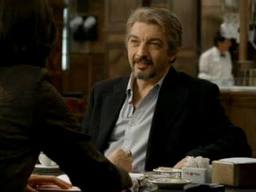
The film opens with Ricardo Darin as Benjamin, a recently retired law clerk and investigator is struggling to write a novel based on a vicious rape and murder case from the mid 70's. He enlists the help of his old boss, the beautiful Irene played by Soledad Vilamil, who he has carried a flame for, for many years. She expresses reservations for reasons which will eventually come apparent. The film then moves in flashbacks between the present day and 1970's Argentina which is rife with corruption and and the excesses of a military junta. A woman is found raped and murdered while her husband was at work, and two immigrant workers have a confession beaten out of them. Benjamin teams up with his lush colleague Sandoval to find the real killer. Together they identify various subtle details which point toward a childhood friend called Gomez. However finding evidence to obtain a conviction is much harder to obtain, doubly so when the political forces controlling intervene. As the past merges with the present, and old secrets come to the fore, Benjamin finds the shocking conclusion at the heart of this tale while perhaps forcing him to confront the heartache he has repressed all these years.
Juan Jose Campanella has created a film of outstanding breadth with such attention to subtle detail that is surpasses anything in the thriller genre I've seen in recent years. At times alternately shocking, frightening or delightfully heartfelt on any number of levels, it is an enjoyable viewing experience. The use of alternating flashbacks with present day action is a tried and tested method and as the plot moves on it exposes the fact that this is Benjamin's memory of events and is often not complete. 

Pablo Sandoval: A guy can change anything. His face, his home, his family, his girlfriend, his religion,his God. But there's one thing he can't change. He can't change his passion...

The central performances from Darin and Vilamal are measured and wonderfully realistic. They give the film a feeling of being true to life.  The setting of 1970's Argentina is an important one and central to understanding the film. Under the auspices of a military coup, a crackdown of all dissent was put in place and a fair trial became a thing of the past.
The film is not just a gripping tale well told, it is also a technical marvel. Campanella must now join the likes of Orson Welles in Touch of Evil for one of the most technically audacious shots of all time involving a packed football stadium and one continuous take from an aerial shot to the depths of the crowd to the bowels of the stadium to the grass on the pitch. Though surely digitally enhanced, it is a remarkable shot.
It is the little details which make the film from the stolen glances between Benjamin and Irene down through the years to the way in which the killer is tracked down to the throw away lines which turn out to have important significance in the final shake-up.
One of the best films of the last few years and a worthy Oscar winner, this just has to be seen by anyone with a passing interest in the power of modern cinema. Tellingly like so many of the great works of the last 5 years, it hasn't come from a big Hollywood Studio but from the foreign language screening of your local cinema. Why with all the opportunities and assets at their disposal do the major studios seem incapable of producing the kind of storytelling worthy of a bright literate audience? All the 3D in the world can't fix that.

Monday, May 9, 2011

Flick of The Day: Touch of Evil

Orson Welles is one of the great figures of Hollywood cinema. A child prodigy, he created a masterpiece with his feature debut, Citizen Kane, aged just 26. There is a certain revisionist view in vogue at the moment, which attempts to lessen the importance of the film, but it is so wrong. Even the most myopic of modern viewers can see how far ahead of its time it was in style, narrative structure and technique. However, Kane was a commercial failure and a controversial one at that. Thereafter, Welles was never given the chance to make a film in Hollywood without interference, and never lived up to the early promise of his debut. However the closest he came was today's flick of the day, Touch of Evil.
After a long period in the wilderness, Welles was hired to play the role of Captain Quinlan, a corrupt local police captain in a town on the American side of the Mexican border. As was often the case, he was soon directing and writing the feature, largely at the behest of star Charlton Heston. The film opens with a much imitated and lauded tracking shot in a rough and tumble Mexican border town, as a bomb is placed in the back of a car of a local businessman and his girlfriend. We follow the car as it moves to the border crossing, along the way we meet Mexican narcotics officer Ramon Vargas, played by Heston and his new bride Susan, played by Janet Leigh as they walk back to their Hotel on the American side. Just over the border, the bomb explodes in a fiery ball, killing the passengers. Of course, as the man on the spot, Vargas feels the need to get involved. Before long, Quinlan is on the scene and doesn't react well to Vargas' involvement. Together they investigate the crime, with Quinlan suspecting a local Mexican employee of the murdered man of planting the bomb. However he chooses to plant evidence on him rather then find proof, setting him on a collision course with Vargas. The film is classic noir, with an ending to match.
Welles is brilliant himself as the malevolent Quinlan, the big fish in the small pond used to getting his way all the time. As one of his former paramour's Tanya played Marlene Dietrich, puts it at the end of the film:

He was some kind of a man... What does it matter what you say about people?

While Heston is not believable as a Mexican, his straight laced approach to the role of the narcotics officer Vargas is well suited and he plays it well throughout. Janet Leigh isn't given a whole lot to do as his wife, apart from being set upon by a band of "marijuana fiends", in a scene that is funny in an unintended manner. 
The plot is no more then your average potboiler then, but it is made then the material by Welles direction. The opening tracking shot, which lasts nearly 3 and a half minutes is just one of a number of technically daring shots in the film and Welles assembled  a great supporting cast including cameo appearances from Zsa-Zsa Gabor and Joseph Cotten. Welles was always famous for his ability to work with actors, seeking their input which was something the likes of Janet Leigh has not experienced before:


"It started with rehearsals. We rehearsed two weeks prior to shooting, which was unusual. We rewrote most of the dialogue, all of us, which was also unusual, and Mr. Welles always wanted our input. It was a collective effort, and there was such a surge of participation, of creativity, of energy. You could feel the pulse growing as we rehearsed. You felt you were inventing something as you went along. Mr. Welles wanted to seize every moment. He didn't want one bland moment. He made you feel you were involved in a wonderful event that was happening before your eyes."


The film should have gone on to great critical acclaim, however when Welles presented his cut to Univeral Internation Pictures, they took the film away from and re-shot and edited it to the point where the plot was incomprehensible and robbed it of the style and wit he had wanted. It was released as a B movie and it largely disappeared from view thereafter until in 1998, the film was re-edited as per Welles wishes and released again on DVD where it found the audience it deserved.


Ultimately Welles never made another film for a major studio, and his relationship with Hollywood was frosty in general. Viewed today, it is a fine film, an entertaining story which is driven by strong performances from Welles and Heston. While not a masterpiece, it is a fine example of the talent of Orson Welles as a director, producing a silk purse of a film out of a sows ear of a b-movie story. Oh, what might have been...

Sunday, March 13, 2011

Flick of The Day: Michael Clayton

Today's film is an old-school thriller of the highest order, Michael Clayton. It is often noted that for all his prowess as a movie star and his undoubted charm as an actor, very few of his films though critically lauded make any money, most barely breaking even. It is a shame then that some of his best work such as O Brother, Where Art Thou?, Good Night and Good Luck and Michael Clayton has been the least successful. For all these films deserve to be seen by as wide an audience as possible.
George Clooney is excellent as the titular lawyer and firm fixer with a gambling problem and a failed restaurant who spends his days and nights fixing all the little problems that would otherwise the firm and its clients. He is called in to help when one of the firm's leading litigators has a nervous breakdown in a deposition in relation to a case involving a killer pesticide. Tom Wilkinson is brilliantly manic as the depressive pushed over the edge by the thought that he has spent years defending this carcinogen. Tilda Swinton also shines as an in house legal counsel for the chemical firm, desperate for the case to be resolved in their favour and willing to go to any lengths to ensure this. It quickly becomes apparent that Wilkinson has evidence that the firm knowingly let this chemical loose and the films becomes a chase, with plot building on plot as Swinton's character seeks to ensure that the evidence never sees the lights of day.
The film feels like a paranoia thriller from the late '70s with its grandstanding performances, dialogue heavy scenes and plotting building up to a grand finale that is a thrilling and satisfying end to what has come before. Wilkinson is extraordinary as Arthur Edens, recalling the performance of Peter Finch in Network, and indeed like that fine performance he gets most of the best lines and monologues.

"Michael, I have great affection for you and you live a very rich and interesting life, but you're a bag man not an attorney. If your intention was to have me committed you should have kept me in Wisconsin where the arrest report, the videotape, eyewitness reports of my inappropriate behaviour would have had jurisdictional relevance. I have no criminal record in the state of New York, and the single determining criterion for involuntary commitment is danger. Is the defendant a danger to himself or to others. You think you got the horses for that? Well good luck and God bless, but I'll tell you this: the last place you want to see me is in court."

Praise must also go to the late, great, Sydney Pollack, always underrated as an actor, who gives a strong performance as the head of the firm, giving the film an added gravitas in the few scenes he shares with Clooney.
Tony Gilroy shows himself to be a fine director with this debut, never underestimating the audiences intelligence and ability to follow what is going on around them. His direction shows a lightness of touch, particularly in relation to the shocking murder that is at the centre of the film. Nothing is layered too heavily or signalled too strongly, he trusts the audience to know that this is wrong and all the more shocking for the matter of fact way in which it is portrayed on screen.
In summary, this is a great film with some fine performances and a great script from Tony Gilroy. Tilda Swinton was well worth her Bafta win as a woman who quickly gets in over her head and who's ruthlessness leads to her downfall. Clooney, Wilkinson and Pollack, all deserve praise. In the end, what is most enjoyable is that the bad guys get their due, and what is more old school then that?

Monday, March 7, 2011

Flick of The Day: Cutter's Way

In contrast to some of the ground breaking films of the 1970s that we have looked at thus far such as Jaws, The French Connection and Blue Collar, the 1980's were very much a step back for the New Hollywood movement. Directors like Friedkin, Coppola and Cimino that had soared so high in the '70s one by one foundered on the rocks of the studio system. Indeed Michael Cimino managed to make a film so stupefyingly dull and expensive that it brought down a whole studio. So it was that the 1980s became a decade of studios playing it safe with a string of sequels and action pictures. There were exceptions of course, and today's film was one of them, Cutter's Way.
Set in the Californian community of Santa Barbara, one of America's wealthiest enclaves set between the mountains and the sea, Cutter's Way is a tale of damaged people, murder and despair in the sunshine. Three old friends live together on the margins of this beach community, disaffected and bitter at the fact that they are on the outside. Richard Bone, wonderfully played by Jeff Bridges, is an ageing gigolo gradually coming to the realisation that his looks won't keep him employed forever. Maureen Cutter, an alcoholic who is sticking by her husband Alex despite the fact that he is slowly stripping away her dignity. Alex Cutter, in a career best performance from John Heard, is a crippled Vietnam  vet who wallows in whiskey and self loathing. 
One night while driving home in the rain, Bone's ageing car breaks down in a alleyway. As he sits wondering what to do, a car pulls into the alley and a man gets out, depositing something in a bin before speeding off. As Bone walks home in the rain, we see a women's foot hanging out of the bin. The next morning the police turn up at his door, a young woman has been murdered. Bone relates his tale to the police and is released. He meets up with his friends Alex and Maureen and as Bone tells them the story, a parade passes by. One of the local grandees, JJ Cord is taking part and as he rides by on a horse, Bone suddenly realises that he is the man he saw in the rain. He quickly tells Alex and together they begin to investigate Cord, with Bone a reluctant participant at first. They band together with Valerie, who is the sister of the murdered woman, and plot to blackmail Cord with the intention of turning him in if he pays up. Of course, not all is at it seems, and until the final scene of the film, you are unsure whether Cord is a guilty man or an innocent man being blackmailed.
Alex becomes obsessed with proving that Cord is guilty as much out of bitterness as catching a killer. The film moves slowly toward a thrilling conclusion but it is as much a character study of a group of people who have been damaged by how their lives have turned out and now exist on the margins of society.

"I don't drink. You know, the routine grind drives me to drink. Tragedy, I take straight"

Cutter rages at the world around him often without any real target, Bone is disaffected and seemingly unwilling to commit to anything, preferring to drift. Maureen is perhaps the most beaten down of three, resigned to her fate. All three make interesting studies and are an interesting counterpoint to the go-go 80's characters in other films of this era. It is hard to believe that Gordon Gekko exists in the same decade as these people.
Overall, this is a great film, driven by some very strong performances particularly from John Heard with a fine script. It is worth seeing if only for Heard's performance, though it has a great story which will keep you thinking after the credit's roll. 

Wednesday, December 8, 2010

Flick of The Day: AntiTrust

There are some films that are worth seeing because they define greatness, they are the peak of the art form: Citizen Kane, Laurence of Arabia, etc. Then there are films that are worth seeing simply for the enjoyment of the genre be it thrillers or action pictures. Then there is that third category, films that by any measure are poor: badly scripted, irregularly acted, or perhaps laughable special effects but have something compelling about the story or the performance that makes it entertaining. 

Antitrust is just such a film. The setup is thus: Milo Hoffman, a confused looking Ryan Phillipe, is an idealistic young programmer who joins Gary Winston's NURV Corp (Never Underestimate Radical Vision). Winston is Tim Robbins doing his best impression of Bill Gates. Well, an evil Bill Gates, if such a thing existed. The real joy of this film is how completely over the top Robbins' performance is. Of course, as you've already guessed, all is not well at NURV, though I think even the most paranoid viewer won't how imagine how outlandishly bad NURV is.

Look out for the hidden surveillance centre camouflaged as...a day car centre. The tale told for all its faults is compelling enough and you may find yourself cheering at the ending, its just the poor script that lets this film down, take for instance this jargon heavy exchange:

Gary: We've loaded a back door to receive SYNAPSE transmissions on all of our OS software for the past 6 years. We've developed compression schemes and file formats that achieve conductivity, but.. We have a problem. You know what that problem is?
Milo: Ah, your adaptors can't overcome the band width limitation of wireless hand helds 
Gary:That's right

It's not all like this of course but it would help if Ryan Phillipe looked like he understood half the words coming from his mouth.
All in all, worth a look if you have an otherwise empty evening in front of yourself.