Sunday, June 19, 2011

Flick of The Day: The Good, The Bad and The Ugly

Very often great art is not recognised as such until long after the artist has passed on. There are innumerable tales of the great and good that end with "and he died penniless". Thankfully cinema is one of those forms where your art will live on to be remembered for good or ill. Perhaps Michael Bay should remember this next time he decides to inflict a Transformers film on an unsuspecting public. Director of today's flick of the day, Sergio Leone is one whose reputation has only grown since his death in 1989, perhaps due to the small body of work he left behind, each of which is a true classic. From his "Man With No Name" trilogy which concluded with today's flick to his Mexican revolution epic A Fistful of Dynamite which we previously reviewed here to his final film, the gigantic Once Upon a Time in America, his work was bold, epic and entertaining.
The Good, The Bad and The Ugly is the final and best instalment of Leone's first foray into the Western genre. As with the previous films A Fistful of Dollars and For a Few Dollars More, Clint Eastwood is once again the mysterious enigmatic stranger. As with each of Leone's film's, it is bigger and grander then the last. Eastwood is the good of the title and along with Eli Wallach as the loudmouth and ugly Tuco and the irredeemably bad Lee Van Cleef are in search of stolen Confederate gold during the ugly depths of the Civil War. In an epic journey across country, they cheat and double cross each other before a final showdown at a graveyard, justly lauded as one of the great finales in modern cinema. 
Each film Leone directed had a habit of being grander and more epic in scale then his previous efforts and as a time went on took longer to create. He spent at least a decade working on his final film and was rumoured to be developing a film based around Stalingrad, perhaps too large a canvas for any director. This need for grandeur is present in today's film with a number of large-scale set pieces that give the film a much more substantial feel then previous efforts including an extended sequence at a civil war battle taking place on either side of a river, with a network of trenches and huge numbers of extras, it is on a scale that even today has the power to make an audience go "Wow".
Of course spectacle is nothing without a great story and actors to carry it. Leone then is very lucky to have Eastwood in perhaps his most iconic role outside of Dirty Harry and perfect as the taciturn loner that the audience immediately identifies with. It helps of course that Wallach and Van Cleef offer such great foils, with Van Cleef's Angel Eyes one of the great screen villains. 

Blondie: [counting Angel Eyes' men] One, two, three, four, five, and six. Six, the perfect number.   Angel Eyes: I thought three was the perfect number. 
Blondie: I've got six more bullets in my gun.

The film is violent, even by today's standards but the dry wit of Eastwood's Blondie and the oafishness of Wallach's Tuco leaven proceedings and give the violence a dark humour which I believe is probably at the root of its continued popularity nearly 45 years after its release.
Leone is one of the all time greats and this is one of his best work's. Backed by a fine cast and another memorable Ennio Morricone score, it is dark, humorous and action filled adventure in an old west that never really existed except for in the mind of a group of gifted Italian film-makers. A great film.

Monday, June 13, 2011

Flick of The Day: The Blues Brothers

I loathe musicals. All that needless singing to advance the plot drives over the edge. There have been legions of Broadway shows that have been adapted for the screen down through the years and I struggle to find a single positive thing  to say. They all seem do overly serious and taken with themselves. However, for a combination of music and performance with a healthy dose of comedy, I must heartily recommend The Blues Brothers as today's flick of the day.
Starring the late great John Belushi and Dan Aykroyd as the eponymous brothers Jake and Elwood, this film is a modern classic from director John Landis. The film opens as Jake is released from prison. Together the two are soon on a "mission from god" in the form of the Nun in charge of their childhood orphanage, which needs $5,000 to stay open. In an attempt to get their band back together and raise the funds, they embark on a madcap cross country trek pursued by State Troopers, Neo Nazis and a murderous Carrie Fisher. Along the way they bump into some legends of blues and soul music including Cab Calloway, James Brown, Aretha Franklin and Ray Charles
The plot is frail to say the least but its carried through by some very energetic musical numbers and by the natural charm of the leading men. John Belushi was never cooler then in this role and it acts as a great reminder of the raw talent that was snuffed out far too young. The other major selling point is the fantastically choreographed car chases with one in particular destroying an entire shopping mall. 

Elwood: Illinois Nazis. 
Jake: I hate Illinois Nazis.

The zany humour at the heart of all John Landis scripts has aged well and any dull moments are forgotten as the film roars to a spectacular finale.
All in all, this is a very enjoyable film which just about carries itself over its 130 minute running time. The various cameo appearances by the great and good of soul and rhythm-and-blues are entertaining and give the film some much needed authenticity. It's funny, lively and one of the few film to come out of Saturday Night Live which has stood the test of time. Well worth a look.

Friday, June 10, 2011

A Daily Flick Recommendation...

A former flick of the day and one of the great films of the 1980s, Cutter's Way has been given a new cinema release at the IFI. Check out our review here and book tickets here. I urge you to see it

Wednesday, June 8, 2011

Flick of The Day: Senna

The documentary film has long been a difficult cinemagoer. A trip to the cinema is by definition a wish to be entertained not lectured. However in recent years, thanks to a gaggle of truly superb documentaries such as American: The Bill Hicks Story, Touching the Void and Anvil, a documentary is now a seriously entertaining and compelling proposition. Today's flick of the day is a recent arrival in cinemas that delivers on all counts, Senna.
Told by the man himself in his own words, Senna is the life story of Ayrton Senna, the Brazilian Formula 1 racing driver who came from Brazil and conquered the world of Motorsport, winning 3 world titles before his life was tragically cut short in a crash at the San Marino Grand Prix in 1994. The film begins as Senna moves to Europe for the first time in 1978 as Go-Kart champion in search of a bigger stage. Before long he is in the highest form of the sport, Formula 1, joining the struggling Toleman team in 1984. It quickly becomes apparent that Ayrton is a special talent, in an early race at Monaco he guides his car to second place in the rain and is hot on the heels of the leader and soon to be nemesis Alain Prost when the race is stopped at Prost's behest because of the rain. 
The relationship between the two is central to the film. Initially grudgingly respectful, this rapidly spirals into enmity when the two becomes team mates for Mclaren in 1988. At 1989 Japanese Grand Prix, Prost drives Senna off the circuit knowing it will guarantee him a World title before Senna returns the favour at the same Grand Prix in 1990. Their duelling and bitter rivalry drives the film forward but in truth Prost is not the villain of the piece. This falls to Jean-Marie Balestre, the man in charge of Formula 1 and who at various points seems to favour his countryman Prost much to the irritation of Senna. The level of political chicanery and outright corruption is shocking at times. 
However most shocking of course is the danger that was involved in the sport at this time. With cars going faster and faster on circuits not built for it and safety regulations that are laughably lax, tragedy was inevitable. The film builds to its climax in this vain with the San Marino Grand Prix in May 1994. A cursed weekend, it began with a horrid crash for driver Rubens Barrichello from which he emerges unscathed, before Austrian driver Roland Ratzenberger is killed on Saturday. We see Ayrton's reaction to all of this, obviously unsettled he decides to race on Sunday wearing an Austrian flag under his suit in honour of Ratzenberger. As Senna entered the high-speed Tamburello corner on lap 6, the car left the track at high speed, hitting the concrete retaining wall. He was just 34 when he died.
The true strength of the movie is the wealth of footage they make use of, enabling Senna to tell his own story. Almost everything seems to have been documented from drivers briefings prior to races to behind the scenes discussions and shocking footage of the aftermath of crashes. The accident suffered by driver Martin Donnelly is particularly difficult to watch. Not only is everything documented, the various camera men took great care to shoot with an eye for cinematography and it gives even the smallest of a scenes a cinematic feeling. Ultimately, this is not the story of why Senna was a great racing driver but why he was a great man, it is a film that is watchable even by somebody with no interest in the sport.
It is a profoundly moving story all the same. Having battled against the blatant cheating of his main rival and the inane bureaucracy of his sport, to be cut down in his prime by a car that was fatally flawed is a bad end. By the time this occurs, you feel you have the measure of the man and how he lived his life. Director Asif Kapadia has created a compelling and ultimately tragic documentary. You really must see it.

Tuesday, June 7, 2011

Flick of The Day: GoodFellas

The gangster movie has been a cornerstone of cinema since before there was a Hollywood. From early classics like Little Caesar and The Public Enemy in the 1930's to Coppola's The Godfather and Scorsese's Mean Streets in the 70's, it has always been a popular genre. It begs an obvious question, what is the best gangster film of them all? I think the answer to that question is today's flick of the day Martin Scorsese's GoodFellas.
Based on the bestselling book by Nicholas Pileggi, this is the true story of a life in the Mafia. It follows the course of Henry Hill, played by Ray Liotta, a half Irish half Sicilian who becomes involved with the mob first as an after school job before blossoming into a fully formed gangster, a GoodFella. He falls under the spell of Jimmy Conway, a rising star of the family, played by Robert De Niro and befriends a crazy hot head called Tommy DeVito played by Joe Pesci. Set to a fantastic period soundtrack, the film moves from the early 50's to the 70's to the bitter end of it all in 1980. Together, the three work various scams and heists for local chieftain Paulie Cicero, a star turn from Paul Sorvino. Like all the great stories, this is the story of the rise and fall.
Scorsese has created a work of stunning breadth and ambition. It comes in at nearly 150 minutes and yet breezes by such is the speed and focus of the editing. There are so many high points that they can't be listed from the single continuous take entrance to a nightclub to the snappy quotable dialogue and the vast cast of characters that remain memorable such is the strength of the script.

Henry Hill: You're a pistol, you're really funny. You're really funny. 
Tommy DeVito: What do you mean I'm funny? 
Henry Hill: It's funny, you know. It's a good story, it's funny, you're a funny guy. 
[laughs] 
Tommy DeVito: What do you mean, you mean the way I talk? What? 
Henry Hill: It's just, you know. You're just funny, it's... funny, the way you tell the story and everything. 
Tommy DeVito: [it becomes quiet] Funny how? What's funny about it? 
Anthony Stabile: Tommy no, You got it all wrong. 
Tommy DeVito: Oh, oh, Anthony. He's a big boy, he knows what he said. What did ya say? Funny how? 
Henry Hill: Jus... 
Tommy DeVito: What? 
Henry Hill: Just... ya know... you're funny. 
Tommy DeVito: You mean, let me understand this cause, ya know maybe it's me, I'm a little fucked up maybe, but I'm funny how, I mean funny like I'm a clown, I amuse you? I make you laugh, I'm here to fuckin' amuse you? What do you mean funny, funny how? How am I funny? 
Henry Hill: Just... you know, how you tell the story, what? 
Tommy DeVito: No, no, I don't know, you said it. How do I know? You said I'm funny. How the fuck am I funny, what the fuck is so funny about me? Tell me, tell me what's funny! 
Henry Hill: [long pause] Get the fuck out of here, Tommy! 
Tommy DeVito: [everyone laughs] Ya motherfucker! I almost had him, I almost had him. Ya stuttering prick ya. Frankie, was he shaking? I wonder about you sometimes, Henry. You may fold under questioning.

The point made throughout the film is that the various characters are in the mob because they like it, it is what drives them. Their various flaws, the frankly psychotic Tommy, the kleptomaniac Jimmy and the easily led Henry are what make them successful gangsters.
It is difficult to underestimate the legacy of GoodFellas, much like Scorsese's previous reinvention of the genre in 1973 with Mean Streets. The creator of HBO's The Sopranos even went so far as to say that "Goodfellas is the Koran for me" and cited it as the film which drove him to create his own masterpiece. The film is a triumph on so many levels. It is not just an account of a life in the Mafia, but a morality play. At the beginning, as Henry and Jimmy follow the rules and pay tribute to their leader Paulie, stay away from drug dealing and avoid murder as a last resort, they begin to prosper. However as the decades move on and they become deeply involved in the drug trade and go against Paulie's wishes, events spiral out of control and lead eventually to their downfall.
I don't think there is anything more that can be said really. It is a fantastic film, packed with stand out performances and perhaps Scorsese's best work as a director. If you haven't already seen it, you really should.

Monday, June 6, 2011

Flick of The Day: The Secret in Their Eyes / El secreto de sus ojos

The foreign language Oscar is a funny old thing, it has often been a source of controversy be it in the unfair nature of the nomination process or some of the more outlandish winners down through the years. 2010 seemed at first to be another such year, when a largely unheralded Argentinian thriller beat out France's Un Prophet and Haneke's The White Ribbon, two films that had done huge business and critical acclaim on the Indie scene in Europe and the US. However, it is only on closer viewing that it becomes apparent what a gem of a movie, and today's flick of the day, The Secret in Their Eyes is.
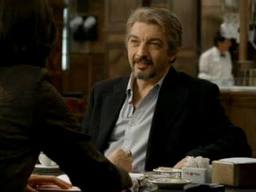
The film opens with Ricardo Darin as Benjamin, a recently retired law clerk and investigator is struggling to write a novel based on a vicious rape and murder case from the mid 70's. He enlists the help of his old boss, the beautiful Irene played by Soledad Vilamil, who he has carried a flame for, for many years. She expresses reservations for reasons which will eventually come apparent. The film then moves in flashbacks between the present day and 1970's Argentina which is rife with corruption and and the excesses of a military junta. A woman is found raped and murdered while her husband was at work, and two immigrant workers have a confession beaten out of them. Benjamin teams up with his lush colleague Sandoval to find the real killer. Together they identify various subtle details which point toward a childhood friend called Gomez. However finding evidence to obtain a conviction is much harder to obtain, doubly so when the political forces controlling intervene. As the past merges with the present, and old secrets come to the fore, Benjamin finds the shocking conclusion at the heart of this tale while perhaps forcing him to confront the heartache he has repressed all these years.
Juan Jose Campanella has created a film of outstanding breadth with such attention to subtle detail that is surpasses anything in the thriller genre I've seen in recent years. At times alternately shocking, frightening or delightfully heartfelt on any number of levels, it is an enjoyable viewing experience. The use of alternating flashbacks with present day action is a tried and tested method and as the plot moves on it exposes the fact that this is Benjamin's memory of events and is often not complete. 

Pablo Sandoval: A guy can change anything. His face, his home, his family, his girlfriend, his religion,his God. But there's one thing he can't change. He can't change his passion...

The central performances from Darin and Vilamal are measured and wonderfully realistic. They give the film a feeling of being true to life.  The setting of 1970's Argentina is an important one and central to understanding the film. Under the auspices of a military coup, a crackdown of all dissent was put in place and a fair trial became a thing of the past.
The film is not just a gripping tale well told, it is also a technical marvel. Campanella must now join the likes of Orson Welles in Touch of Evil for one of the most technically audacious shots of all time involving a packed football stadium and one continuous take from an aerial shot to the depths of the crowd to the bowels of the stadium to the grass on the pitch. Though surely digitally enhanced, it is a remarkable shot.
It is the little details which make the film from the stolen glances between Benjamin and Irene down through the years to the way in which the killer is tracked down to the throw away lines which turn out to have important significance in the final shake-up.
One of the best films of the last few years and a worthy Oscar winner, this just has to be seen by anyone with a passing interest in the power of modern cinema. Tellingly like so many of the great works of the last 5 years, it hasn't come from a big Hollywood Studio but from the foreign language screening of your local cinema. Why with all the opportunities and assets at their disposal do the major studios seem incapable of producing the kind of storytelling worthy of a bright literate audience? All the 3D in the world can't fix that.

Thursday, June 2, 2011

Flick of The Day: Apocalypse Now

All great artistic movements have moved in cycles, with a small scale beginning, a high point of some great work which is swiftly followed by excess, hyperbole and an eventual nadir. The so called New Hollywood movement of the 1970's was no different. Today's flick of the day, Apocalypse Now fits neatly into that curve just past the zenith when the movie brats that had taken over Hollywood began  to become self indulgent creating cinema of monumental excess that would end with Michael Cimino's Heavens Gate. That is not to denigrate Apocalypse for it is a film borne of some amazing talent. A wild ride into the heart of darkness in the Vietnam war. It is, in short, unlike anything else you will ever see.
With a principal shoot lasting well over a year and a post production period that dragged on for another 2 years, this is a film that was literally years in the making. Martin Sheen is Captain Benjamin Willard, a special forces operative on the edge of reason. He is despatched by some shady superiors on a mission upriver into enemy territory to track down and terminate "with extreme prejudice" Colonel Walther Kurtz played by Marlon Brando, a deranged officer who has gone too far and set himself as a demigod in the heart of the Cambodian jungle. What follows is one hell of a trip. As Willard moves upriver, he encounters a surf happy Colonel Kilgore in the Air Cavalry played by an amazingly over the top Robert Duvall who goes into battle blasting out Wagner. He encounters Viet Cong, Playboy Bunnies and madness at every turn before finally reaching Kurtz's compound for a final showdown.
Based on Joseph Conrad's novella Heart of Darkness, Apocalypse Now isn't so much an account of the Vietnam War as it is an indictment of the madness of all war transposed onto the Vietnam conflict. It is violent to the point of cruelty at times and overlong but there is much to enjoy here. For a production that was beset with difficulties, storms, Sheen suffering a heart attack and Brando turning up on set bloated and overweight, there are some spectacular set pieces. The dawn helicopter raid and the the arrival at Kurtz's camp are particular highlights. Given the amount of film that was shot, it is amazing Francis Ford Coppola managed to produce the film he did, indeed the film is as famed for what was left out as left in. There are a number of expensively assembled sequences which didn't make the final cut and yet it still feels too long by the end given that it takes so long to arrive at its destination. The film was re-cut for a redux version in 2001, which restores 49 more minutes of footage but this version has always felt as overkill to me.
Ultimately though it doesn't really matter about the length because there is just about enough here that is entertaining and enthralling to carry the film till the inevitable conclusion. One sour note that I feel must be mentioned though is the decision of Coppola to hack in a cow to death with machetes for the climax of the film, in homage to a local tradition. This is a reprehensible act and once again reinforces the feeling that this is the beginning of the end in terms of the New Hollywood movement. It earned the film an "Unacceptable" rating from the American Humane Association. One cannot fail to agree with that sentiment.


Kilgore: Smell that? You smell that? 
Lance: What? 
Kilgore: Napalm, son. Nothing else in the world smells like that. 
[kneels] 
Kilgore: I love the smell of napalm in the morning. You know, one time we had a hill bombed, for 12 hours. When it was all over, I walked up. We didn't find one of 'em, not one stinkin' dink body. The smell, you know that gasoline smell, the whole hill. Smelled like 
[sniffing, pondering] 
Kilgore: victory. Someday this war's gonna end... 

All in all, this film broke new ground in its portrayal of war, and despite its many flaws, is worth seeing if only for it's place in the history of cinema and the career's of the fine cast which populate it.