Showing posts with label murder mystery. Show all posts

Wednesday, July 6, 2011

Flick of The Day: Shadow of a Doubt

As I was reading through the list of 111 movies that have graced the pages of The Daily Flick since I began, I was shocked to see that I had yet to review a single film by Alfred Hitchcock, the master of suspense. Indeed, I have reviewed two works of Henri-Georges Clouzot, the so called "French Hitchcock", The Wages of Fear and Les Diaboliques and none from the man himself, Hitch. In that spirit then, today's flick of the day is one of Hitchcock's lesser known classics, Shadow of a Doubt.
Starring the brilliant Joseph Cotten, truely one of the most underrated actors of the century as Charles Oakley, a man with a secret. As the film opens, he hides in a boarding house in New York pursued by shady unknown men. As they pursue, Charles decides to head for California to pay a visit to his sister and her family in the kind of idyllic and peaceful pre-war American  town that existed only in the movies. Of course, it is apparent early on that all is not as it seems with Charles. He has the kind of eerie charm that at once disarms and raises alarm bells. As my mother might have put it, there is just something not quite right about him.
On arriving in California, Charles endears himself to all including his impressionable young niece Charlie, played by Teresa Wright. Charlie adores her Uncle however when a pair of detectives turn up, posing as magazine writers and asking questions about Uncle Charles, her suspicions begin to be aroused. Why has he torn a headline from the evening newspaper about the Merry Widow murderer? Why does he refuse to have his photo taken? As the tension mounts and her Uncle's behaviour begins to become more erratic, Charlie is left with only one conclusion.
This is Hitchcock's first great masterpiece and perhaps his most American film, expertly dissecting the vicissitudes of small town life between the wars, as small towns across America were becoming encroached on by the inexorable rise of urbanisation and the automobile. It also plays on that universal fear of the relative who you just don't trust. Every family in the world has a black sheep but what if he was more then that? Hitchcock plays on these fears expertly and Joseph Cotten is excellent as the decidedly odd Charles. Quick to anger and yet endlessly trying to endear himself, it is in short creepy.

Uncle Charlie: The cities are full of women, middle-aged widows, husbands, dead, husbands who've spent their lives making fortunes, working and working. And then they die and leave their money to their wives, their silly wives. And what do the wives do, these useless women? You see them in the hotels, the best hotels, every day by the thousands, drinking the money, eating the money, losing the money at bridge, playing all day and all night, smelling of money, proud of their jewelry but of nothing else, horrible, faded, fat, greedy women... Are they human or are they fat, wheezing animals, hmm? And what happens to animals when they get too fat and too old?

A fascinating psychological study and a film that is as thrilling today as it was upon its release. It is perhaps his darkest work, the worst possible outcome is the ending you get. It is your classic good vs evil tale in small town America. A classic to be sure with well drawn characters and a charming setting that is beautifully shot by Joseph Valentine on location in California. Teresa Wright excels as Charlie, in only her fourth picture. She would go on to have a long career, making her final performance in an adaptation of John Grisham's The Rainmaker opposite a young Matt Damon some 60 years after this film. Quite a career.
The scene above is perhaps my favourite shot of Hitchcock's long and varied career. It is as Uncle Charles train arrives in town, and while the family await his arrival, the youngest boy hangs back transfixed by the great locomotive. His eyes follow it down the platform. It is at once perfectly realistic and yet represents the best of cinema. Well, what more can be said then? It is a classic to be sure and a film that still shines through all these years later. A must see.


Monday, June 27, 2011

Flick of The Day: Chinatown

So here we are, my favourite film of all time. Perfection is a strong word but in terms of cinema, today's flick of the day is as close to  perfection as is possible in a full length feature in the modern era. A towering central performance, a director on top form and a legendary screenwriter, this film is the sum of its parts. A dark and disturbing journey into life and corruption in sun drenched 1930's Los Angeles. Forget it Jake, It's Chinatown.
Jake Gittes, a superb Jack Nicholson, is a private eye who specialises in catching out cheating spouses. A former cop, he has a sharp eye and a quick tongue. One day he is hired by Evelyn Mulwray to follow her husband Holles, whom she suspects of infidelity. Holles is Chief Engineer in the Water department. As Jake follows Holles around, he is intrigued to find him taking unexplained trips to various reservoirs and water tables. However, when he photographs Holles in the company of a young girl, he figures his job is done. However it quickly becomes apparent that Jake is in over his head when the real Mrs Mulwray, played by Faye Dunaway turns up and had nothing to do with hiring Jake and Holles turns up dead. Going against his own gut, he decides he has to get to the bottom of a tangled web involving shady land deals, corrupt bureaucracy, orange farmers and Evelyn's father, an ageing land baron called Noah Cross, played by the incomparable John Huston. A dark and shocking finale ensues, in which Jake is forced to fight against forces he is powerless to stop and has to confront his own past in Chinatown.
A powerful film even today, the real crux of its success is to marry the kind of classic screen noir of the 1930's and 40's with a pessimistic critique of capitalist and bureaucratic structures that began to seep into American cinema in the post Watergate 70's. A great script from Robert Towne marries these grand themes with a story of corruption and family deceit that is as old as Oedipus. It is packed with great quotable lines.

Jake Gittes: Mulvihill! What are you doing here? 
Mulvihill: They shut my water off. What's it to you? 
Jake Gittes: How'd you find out about it? You don't drink it; you don't take a bath in it... They wrote you a letter. But then you have to be able to read.

It would be a shame if this script were wasted on ropy acting and lazy direction. Thankfully, then these elements are equally strong. Nicholson gives a strong performance in a role that cemented his place as a star. Hollywood legend John Huston is equally adept as the malevolent Noah Crosss and his scenes with Nicholson are a treat. Roman Polanksi's direction is even paced and draws the best out of the cast and the script. Almost flawless.
The film was nominated for 11 Academy Awards on its release in 1974, winning just the one for Robert Towne's brilliant script having had the misfortune of being made in the same year as The Godfather Part II. It's reputation has only grown in the intervening years, becoming something of a mythic beast such is the reputation of the likes of Towne, Polanski and Nicholson in terms of the 70's New Hollywood movement. It even spawned a vastly inferior sequel in 1990, The Two Jakes.

Jake Gittes: In Chinatown. 
Evelyn Mulwray: What were you doing there? 
Jake Gittes: Working for the District Attorney. 
Evelyn Mulwray: Doing what? 
Jake Gittes: As little as possible. 
Evelyn Mulwray: The District Attorney gives his men advice like that? 
Jake Gittes: They do in Chinatown.

The film is relentlessly cynical in its outlook, something that is at the heart of film noir but in this case updated for a modern audience. This alone would have made the film memorable but the combination of this with a great story and the aforementioned talents of Nicholson et al raise this to another level.
Well, what else is there to say? This really is my favourite film of all time. It is as good as it gets on all fronts and really a must see for anyone with an interest in great cinema. Check it out.

Monday, June 6, 2011

Flick of The Day: The Secret in Their Eyes / El secreto de sus ojos

The foreign language Oscar is a funny old thing, it has often been a source of controversy be it in the unfair nature of the nomination process or some of the more outlandish winners down through the years. 2010 seemed at first to be another such year, when a largely unheralded Argentinian thriller beat out France's Un Prophet and Haneke's The White Ribbon, two films that had done huge business and critical acclaim on the Indie scene in Europe and the US. However, it is only on closer viewing that it becomes apparent what a gem of a movie, and today's flick of the day, The Secret in Their Eyes is.
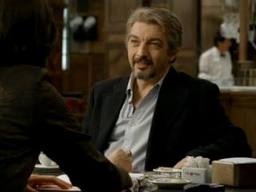
The film opens with Ricardo Darin as Benjamin, a recently retired law clerk and investigator is struggling to write a novel based on a vicious rape and murder case from the mid 70's. He enlists the help of his old boss, the beautiful Irene played by Soledad Vilamil, who he has carried a flame for, for many years. She expresses reservations for reasons which will eventually come apparent. The film then moves in flashbacks between the present day and 1970's Argentina which is rife with corruption and and the excesses of a military junta. A woman is found raped and murdered while her husband was at work, and two immigrant workers have a confession beaten out of them. Benjamin teams up with his lush colleague Sandoval to find the real killer. Together they identify various subtle details which point toward a childhood friend called Gomez. However finding evidence to obtain a conviction is much harder to obtain, doubly so when the political forces controlling intervene. As the past merges with the present, and old secrets come to the fore, Benjamin finds the shocking conclusion at the heart of this tale while perhaps forcing him to confront the heartache he has repressed all these years.
Juan Jose Campanella has created a film of outstanding breadth with such attention to subtle detail that is surpasses anything in the thriller genre I've seen in recent years. At times alternately shocking, frightening or delightfully heartfelt on any number of levels, it is an enjoyable viewing experience. The use of alternating flashbacks with present day action is a tried and tested method and as the plot moves on it exposes the fact that this is Benjamin's memory of events and is often not complete. 

Pablo Sandoval: A guy can change anything. His face, his home, his family, his girlfriend, his religion,his God. But there's one thing he can't change. He can't change his passion...

The central performances from Darin and Vilamal are measured and wonderfully realistic. They give the film a feeling of being true to life.  The setting of 1970's Argentina is an important one and central to understanding the film. Under the auspices of a military coup, a crackdown of all dissent was put in place and a fair trial became a thing of the past.
The film is not just a gripping tale well told, it is also a technical marvel. Campanella must now join the likes of Orson Welles in Touch of Evil for one of the most technically audacious shots of all time involving a packed football stadium and one continuous take from an aerial shot to the depths of the crowd to the bowels of the stadium to the grass on the pitch. Though surely digitally enhanced, it is a remarkable shot.
It is the little details which make the film from the stolen glances between Benjamin and Irene down through the years to the way in which the killer is tracked down to the throw away lines which turn out to have important significance in the final shake-up.
One of the best films of the last few years and a worthy Oscar winner, this just has to be seen by anyone with a passing interest in the power of modern cinema. Tellingly like so many of the great works of the last 5 years, it hasn't come from a big Hollywood Studio but from the foreign language screening of your local cinema. Why with all the opportunities and assets at their disposal do the major studios seem incapable of producing the kind of storytelling worthy of a bright literate audience? All the 3D in the world can't fix that.

Wednesday, May 4, 2011

Flick of The Day: Les Diaboliques / The Devils

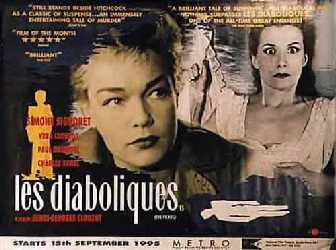
A few weeks back we looked at Henri-Georges Clouzot's work, The Wages of Fear, noting his reputation as the French Hitchcock. Today's flick of the day is perhaps his masterpiece, Les Diaboliques, a devilish psychological thriller set in a boarding school. 
In a provincial boarding school run by the brutish Michel Delassalle played by Paul Meurisse, his long suffering wife Christina and his equally downtrodden mistress Nicole are plotting murder. Though Christina owns the boarding school of which he is headmaster, she has been beaten down by years of abuse and suffers from a weak heart. Together they draw up a plan to get rid of him over a holiday weekend. Christina runs away with Nicole to her country home and telephones Michel to demand a divorce. Michel pursues the pair and when he arrives, Christina drugs him with tainted whiskey and together they drown him in a bathtub. Hiding the body in a wicker basket, they return to the school late at night and dump Michel into the murky depths of the pool. Of course, like all best laid plans, something goes wrong. A series of events point to Michel being very much alive and when they drain the pool, his body is nowhere to be found.  Is he alive or dead? Christina can not handle the guilt and with her heart troubling her takes to her bed. However all is not as it seems and Les Diaboliques has one of the great twist endings of all time.
This is a real gem of a film and Clouzot successfully builds the tension as the plot unfolds and Christina's mind begins to unravel. He does this by creating a chilling atmosphere in the school, with pupils swearing they saw the missing headmaster and lots of atmospheric dark corners with doors opening unbidden in the night. All very much the kind of tactics used in your average horror film. This leads the audience to begin to question what they are seeing, much like Christina. Until the last frame, you are unsure as to Michel's ultimate fate and that is a remarkable achievement. There is also some some excellent symbolic imagery. When a guilty Christina hires a retired detective to investigate Michel's disappearance, there is a scene where they talk in the bedroom partitioned by bars much like a murder suspect behind bars.
It is difficult to overestimate the significance of this film with its plot lines and twists turning up in various forms in numerous thrillers down through the years. Indeed the film itself has been remade three times including a truly dire Sharon Stone vehicle from the '90s remarkable only for abandoning Clouzot's ending and reproducing the rest of the film shot for shot. I suppose it has always been thus in Hollywood.

Christina Delassalle: So it's a coincidence? 
Nicole Horner: A coincidence, yes. 
Christina Delassalle: And Fichet. Was his being at the morgue a coincidence? And the suit. And the hotel. And now the children! Is it a coincidence that it's getting closer and closer?

A great film which any self-respecting thriller fan has to see, it has become a touchstone for the genre since its release in 1955. Perhaps Clouzot's best work alongside The Wages of Fear, it marked  him as director par excellence. The film still feels fresh today with its plot riddled with turns, sexual intrigue and a story that any audience can find compelling and believable.

Thursday, April 28, 2011

Flick of The Day: L.A Confidential

The work of American novelist James Ellroy is notoriously hard to adapt for the screen, written as it is in short staccato sentences with dense plotting involving numerous strands and characters. This is its strength as fiction but obviously harder to carry onto the big screen. If this in done badly, you get a flop like Brian De Palma's The Black Dahlia, if done well, you get today's flick of the day, L.A Confidential one of the best films of the 1990's and a multiple Oscar winner.
Apart from a great script from director Curtis Hanson and Brian Helgeland which successfully reduces the scope of Ellroy's novel while still retaining the core story, the other main strength of this movie is a cast to die for. Russell Crowe is a violent yet good hearted Detective Bud White, James Cromwell is his Machiavellian commanding officer, Captain Dudley Smith. Guy Pearce is Edmund Exeley an up and coming strait laced star of the LAPD. Kevin Spacey, is Hollywood Jack Vincennes, an amoral cop to the stars. Kim Basinger is Lynn Bracken, a high class call girl whose career is managed by millionaire Pierce Morehouse Patchett, a brilliant turn from David Strathairn and finally Danny DeVito as the sleazy magazine editor Sid Hudgens.
Set in 1950s Los Angeles, the film opens on Christmas Eve when a group of drunken detectives attack some newly apprehended suspects in an event the press dub, "Bloody Christmas". Thereafter in an attempt to clean up the force, the top brass seek to prosecute the officers involved. Keen to move up, Exeley agrees to testify against his own colleagues, making him a hated figure while Bud White and Jack Vincennes refuse. The film then follows the rise and fall of these three detectives and their boss, Captain Smith. They become embroiled in the investigation of a shocking massacre at a late night coffee shop that may or may not involve organised crime. However all is not as it seems, and  an intricate plot leads to a great twisting conclusion involving drugs, prostitution and police corruption that goes to the very top. 
With a plot dense enough to match the great of the genre like Chinatown or The Big Sleep, this is a great detective yarn. Hanson has managed to perfectly capture the glamour and sleazy underbelly of post-war Los Angeles. Down to a tee, everything feels perfectly of the period in terms of fashion, decor and location. It sucks you into the period and tells a great story.The film received 9 Oscar nominations but lost in almost all categories due to the unstoppable juggernaut that was Titanic. It is shocking now to think that a film as poorly written and acted as Titanic outshone this picture but such are the unknowing ways of the Academy. One of the few awards it did win was for its screenplay, adapted as I've said by Hanson and Helgeland which is well deserved as the film is endlessly quotable.

Bud White: Merry Christmas. 
Lynn Bracken: Merry Christmas to you, officer. 
Bud White: That obvious, huh? 
Lynn Bracken: It's practically stamped on your forehead

This really is a must see film, combining a great cast with a fine script to produce a really old-fashioned actor driven movie, the kind that studios either don't want to make or are unable of making. They seem more and more interested in producing thrash in a 3D glaze with each passing day. I am no luddite and have never been against the use of advancing technology in cinema but it should not be at at the expense of basic storytelling. It is telling that this film lost out to effects driven schlock like Titanic, telling and disappointing. A great film.

Wednesday, April 6, 2011

Flick of The Day: Call Northside 777

Filmed in a pseudo-documentary style by director Henry Hathaway, perhaps better remembered these days as director of two John Wayne's best films True Grit and The Sons of Katie Elder, today's flick of the day is a true crime tale set in 1940's Chicago. The documentary style is used to highlight the true to life tale at its core.
In 1932, prohibition era Chicago a policeman is gunned down inside a speakeasy and Frank Wiecek played by Richard Conte is quickly arrested and sentenced to 99 years for the crime. Fast forward 11 years and Wiecek's ageing mother places an ad in a newspaper offering a reward of $5,000 for any information. She is firm in her belief that Frank cannot be guilty. This leads a sceptical editor of the Chicago Times, Brian Kelly played by the always brilliant Lee J. Cobb to assign one of his reporters P.J McNeal to investigate. Jimmy Stewart, perhaps the greatest American actor of his time, shines as McNeal. He imbues the character with the kind of lived in feeling that earned him the nickname The Ordinary Hero.
Of course, as soon as McNeal starts to investigate, the case which had at first seemed so solid begins to slowly unravel. As he chips away at the evidence that sent a cop killer to jail, he comes up against resistance from all corners of the justice system. Everyone is keen for Frank Wiecek to stay where he is. Eventually it comes down to McNeal having to prove that a witness lied in court. In a thrilling finale, an enlarged photograph plays a crucial part, the tension mounting as the photograph is enlarged, reminiscent of The Tell-Tale Heart by Edgar Allan Poe.
The use of a documentary style gives the film an air of fact. You feel like you are following an investigation as each step McNeal takes is lay out in front of you. The use of then cutting edge technology also enhances this feeling. There is a lie detector test in which each operation of the machine is described in such a manner by the operator that he is either a very wooden actor or a real life lie detector. The crucial photograph is sent via the telephone, oh what wonders!. Again this is described in great detail. These scenes are enjoyable curiosities but not overly compelling. The real highlights are the performances of Cobb and Stewart. Its an enjoyable yarn, particularly when Stewart goes searching in the Polish slums for a missing witness. His everyman going where we wouldn't. Sure the ending feels a little corny and god bless america-ish but then you have to watch it in the context of which it was produced. The second world war had just ended and people wanted uplifting tales that reaffirmed their belief that all those people that died, did so for a just cause.

Aw, look, Frank, it's a big thing when a sovereign state admits a mistake. But remember this: there aren't many governments in the world that would do it

Overall, this is a fine film, worth seeing if only for another great performance from Jimmy Stewart. The first film shot on location in Chicago, there are some excellent location shots of that fine city. Well worth a look on a quiet day.

Monday, March 7, 2011

Flick of The Day: Cutter's Way

In contrast to some of the ground breaking films of the 1970s that we have looked at thus far such as Jaws, The French Connection and Blue Collar, the 1980's were very much a step back for the New Hollywood movement. Directors like Friedkin, Coppola and Cimino that had soared so high in the '70s one by one foundered on the rocks of the studio system. Indeed Michael Cimino managed to make a film so stupefyingly dull and expensive that it brought down a whole studio. So it was that the 1980s became a decade of studios playing it safe with a string of sequels and action pictures. There were exceptions of course, and today's film was one of them, Cutter's Way.
Set in the Californian community of Santa Barbara, one of America's wealthiest enclaves set between the mountains and the sea, Cutter's Way is a tale of damaged people, murder and despair in the sunshine. Three old friends live together on the margins of this beach community, disaffected and bitter at the fact that they are on the outside. Richard Bone, wonderfully played by Jeff Bridges, is an ageing gigolo gradually coming to the realisation that his looks won't keep him employed forever. Maureen Cutter, an alcoholic who is sticking by her husband Alex despite the fact that he is slowly stripping away her dignity. Alex Cutter, in a career best performance from John Heard, is a crippled Vietnam  vet who wallows in whiskey and self loathing. 
One night while driving home in the rain, Bone's ageing car breaks down in a alleyway. As he sits wondering what to do, a car pulls into the alley and a man gets out, depositing something in a bin before speeding off. As Bone walks home in the rain, we see a women's foot hanging out of the bin. The next morning the police turn up at his door, a young woman has been murdered. Bone relates his tale to the police and is released. He meets up with his friends Alex and Maureen and as Bone tells them the story, a parade passes by. One of the local grandees, JJ Cord is taking part and as he rides by on a horse, Bone suddenly realises that he is the man he saw in the rain. He quickly tells Alex and together they begin to investigate Cord, with Bone a reluctant participant at first. They band together with Valerie, who is the sister of the murdered woman, and plot to blackmail Cord with the intention of turning him in if he pays up. Of course, not all is at it seems, and until the final scene of the film, you are unsure whether Cord is a guilty man or an innocent man being blackmailed.
Alex becomes obsessed with proving that Cord is guilty as much out of bitterness as catching a killer. The film moves slowly toward a thrilling conclusion but it is as much a character study of a group of people who have been damaged by how their lives have turned out and now exist on the margins of society.

"I don't drink. You know, the routine grind drives me to drink. Tragedy, I take straight"

Cutter rages at the world around him often without any real target, Bone is disaffected and seemingly unwilling to commit to anything, preferring to drift. Maureen is perhaps the most beaten down of three, resigned to her fate. All three make interesting studies and are an interesting counterpoint to the go-go 80's characters in other films of this era. It is hard to believe that Gordon Gekko exists in the same decade as these people.
Overall, this is a great film, driven by some very strong performances particularly from John Heard with a fine script. It is worth seeing if only for Heard's performance, though it has a great story which will keep you thinking after the credit's roll. 

Monday, February 14, 2011

Flick of The Day: The Quiet American (2002)

Graham Greene was one of the great writers of literary fiction of the late 20th Century, combining a journalistic eye with a flair for storytelling to great effect. One of his best traits was his prescience, putting his finger on the pulse of the political climate of the day and writing novels that foreshadowed the Communist takeover in Cuba and the American build-up in Vietnam amongst others. This has led to numerous adaptations of his various novels with today's film The Quiet American the second such adaptation of this work.
Retaining the anti-American tone of Greene's novel, this is a very fine adaptation of a classic tale of world weary cynic, Thomas Fowler, a British journalist working for The London Times in Saigon in 1952, covering the gradual downfall of the French occupation and the inexorable rise of the communist forces of North Vietnam. He takes tea at 11 each morning and files the odd story with the London office, spending most of his time romancing his Vietnamese girlfriend Phuong and smoking Opium. Into this scene comes Pyle, ably played by Brendan Fraser, as an idealistic young American in Saigon ostensibly to offer aid to the struggling country. Fowler has an open distaste for the machinations of the American legation but respects Pyle's idealism if not where it ultimately leads.
Michael Caine is excellent as Fowler, playing a character who is struggling with competing motivations that are not always pure. He wants to stay uncommitted from the war which is brewing all around him while still sticking to his principals, all the while trying to retain the love of his girlfriend. It is a delicate performance which carries the film. The film's other main attribute is the realistic portrayal of Saigon, a beautiful French colonial City with a constant smell of damp decay in the air, pervading its squares and cafe's. If there is a criticism, it is that there are no really well fleshed out Vietnamese characters. They all seem to be there to act as metaphors for the Vietnamese peoples national character. 
This film was inirially held back for release by almost a year after 9/11 as it was felt that its tone was out of step with the mood of the day. This is perhaps unfair as It is both true to Greene's intentions ans is not as overtly anti-American as this action would imply. Pyle's actions while well-meaning are reprehensible and they are symptomatic of how America did act in Vietnam, duplicitous and with its own interests at heart, not those of the Vietnamese people. This is a fine film with a nuanced central performance from Caine and a compelling mysterious storyline. Well worth a look.